NASA Is Looking For New Prize Ideas

NASA Seeks Ideas for New Prize Challenges

"The Innovative Partnerships Program at NASA Headquarters in Washington is offering an opportunity for the public to help shape the prize challenges the agency offers to America's future citizen-inventors. For the next six weeks, ideas for new Centennial Challenge prize competitions may be proposed for NASA's consideration. Creative ideas are sought from industry, colleges, universities, private organizations and the public. The ideas will be posted on the NASA Web site to stimulate additional creativity. Some selected proposals may be formulated into future prize competitions starting in 2010, pending availability of prize purse funding."


Advertise Here

22 Comments

| Leave a comment

I got a few ideas..


. for cheapest Weight Vs Cost to LEO.

How about prizes for developing things the common man can use to reach, work, and live in space?

RLV related equipment (engines, pumps, shielding ideas that can be reused regularly without needing to be rebuilt every flight).
Easy to maintain habitats and kitchen equipment (radiation mitigation, food prep/storage, water processing, air scrubbers, automated farming, etc...)
Space suits for the common man, machine tools, entrenching tools and other dirt moving equipment, safety gear.
Things along that line would be my suggestion.

If we are truly to become a space fairing nation then we need to bring some attention to the problem of getting Joe average in orbit. What better way then to get him involved in building his own kit?

The "Lunar ISRU Challenge" would be a rich area for a prize.

To give credit where it's due, I saw this suggestion in a post responding to an article on space.com the other day and thought it was a great idea, and certainly timely.

Although there are a lot a ways such a prize could be structured, I'd make a quick guess that the focus should be on demonstrations of practical chemical processes for separating molecules we're interested in from lunar materials.

Any ISRU experts here (I know there are!) who would like to make some informed suggestions and comments on specific goals, rules and guidelines, prize amounts, and how such a challenge might be structured to get the biggest technological return on the prize money?

And the point of excluding government labs from even submitting prize ideas is?

How about?

- a solar powered rover that excavates the top inch of soil and extracts water from it

- a subscale UAV Peagasus system for launching micro-payloads (N-prize on steroids)

- a supersonic UAV for trans Pacific package delivery

user-pic

7 billion dollar prize 2 land 6 people 3 male 3 female on mars and start a colony maybe 10 billion

@George - that's what I'm talkin about. $1G for Mars Orbiter, $7G is a good incentive for landing, colony is a nice touch. The idea of a standing Mars (Moon, Ceres, Jupiter) Prize makes a lot of sense for legitimizing Space as Places.

@Maxwell - something like what you describe happened with the NASA spacesuit challenge. A guy from downeast Maine won it using components from Home Depot. There was talk of doing a mechanical counter-pressure glove prize.

Would suggest that open-source tooling and hardware is the way to go for "Joe Average Spacer". 3D printers have come a long way in a short time and some of the biggest advances ($750 Arduino-powered 3d printer) are closely in-line with space hardware needs in terms of size, feedstock and power use. An open library of space hardware means anyone can go.

Would anyone on this board be interested in that kind of project? It'd be some research and some development, all toward open-sourcing a basic space kit? Suit, gloves, PLSS,

Other good prize ideas include lunar sample-return, waveriders and other far-reaching attempts. The Lunar Lander Challenge is a model. For very little money NASA has helped encourage a set of companies to develop these lander prototypes. The next logical step is to sample return or ISRU prizes. Google XPrize is already in operation so could supplement or follow that.

The idea of kit-based prizes has a lot of merit because they focus the scope of a project. NGLLC was hard, it took years to win - in some ways harder than first XPrize. The Glove Challenge could be followed by multi-environment tool, personal robotic, ATV, communications and power systems. Something like the recent desert trials but with prizes.

tl;dr - we can do it.

Develop lowest Delta-V maneuver to transfer cargo to the moon. Probably using Weak stability boundary techniques
jb

@jb - what kind of launch opportunities are available with that kind of architecture? The similar ones I've heard of for various places can vary from a few times a year to decades or centuries using that technique. Wouldn't a "better electric propulsion prize" be better?

How about a "star trek body scanner"?

I was about to propose this to the current Washington admin.

Why don't we offer a X-prize level of $$ for the first company to develop something along the lines of the ST medical scanner?

It would revolutionize health care & would be a requirement for a Mars mission. Something that does CT, MRI, Xray, "full body hi-res imaging", and all other human physiological diagnostics in one unit would be something that would benefit all mankind AND be a key to making "virtual presence" doctors a possibility.

Stu

Fred Sanford mentioned cheapest weight vs. cost to LEO. I think that's a good idea. I think you could have a prize for lowest flyaway cost, but also maybe have a prize for getting total costs below a certain target, such as $1,000 per kg average in a one year period, averaged using total program costs, not just flyaway costs. Prizes for cost to GTO, to lunar orbit, lunar surface, Mars orbit, etc. could also be implemented over time.

A reusable space tug, say 12,000 kg LEO to GEO.

Although half a metric ton may be more suitable for an initial prize.

Prize a sum of money for the winner and a launch to LEO for the 4 best entrants.

@JO5H I'm no expert on it but with WSB missions to the moon the trajectories should be relatively frequent. Trajectories to the other planets is another story. Since mission is low Delta-V it should be able to be done now without waiting for the maturing of the electric propulsion technology. Use what we have now and put the new propulsion in when they can.
jb

How about a prize for how to create a major program without an overly bloated program management structure? There's a lot of dead weight on the newer programs these days.

"The Innovative Partnerships Program at NASA Headquarters in Washington..."


Looks like this NASA organization in DC is overstaffed with too many bad idea thinkers, not enough real get-it-done'rs, and needs some serious downsizing.

So their latest plan is to "allow" the taxpayers to "help" them do the jobs that the taxpayer is already paying them who knows how much to do??

Public should have some real accountability for this kind of taxpayer expense.

Haven't seen a list of what innovations this organization has actually accomplished so far & how much taxpayer $$ has already been spent on personnel & prizes etc.

user-pic

@JO5H Would anyone on this board be interested in that kind of project? It'd be some research and some development, all toward open-sourcing a basic space kit? Suit, gloves, PLSS,


Thats a great idea! I am an aerospace systems engineer and am interested.

Would you be interested in being a focal for this?

How about a prize where NASA figures out how to lower costs so it can actually do something rather than not.

I would like to see a prize given for landing an operating craft on Phobos.

A second prize for a sample return from Phobos.

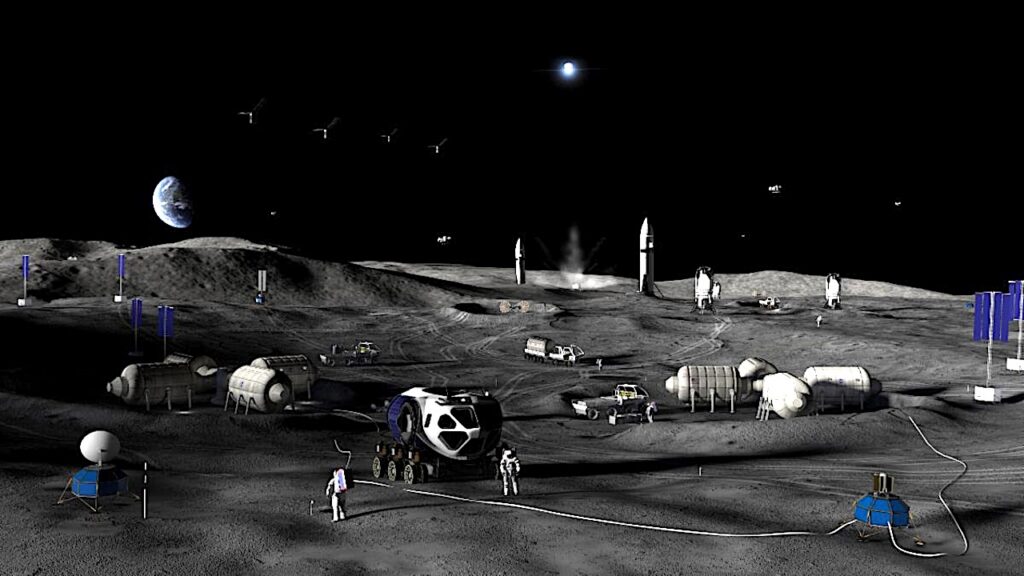
Lunar industrial machining, integrating technological systems. LIMITS for short. Basically take teleoperated machine tools, forging tech (ceramic vessels), and big ass mirrors to the surface of the moon. Melt and reduce regolith into base minerals, machine replacement parts. Ultimate goal would be to produce another LIMITS machine, and another, and another...

Been suggesting this over at my site as a way to argue against a manned modular moon base ala ISS on the moon. We can build the base from here on Earth! Just send up the robots and the tech... talk about absolute boon to space exploration, if you can build stuff on the moon you change everything.

Be the first to discover the daily dosage of intermittent artificial gravity that a human needs to stop bone loss in space and do it without making them sick.

Once this is discovered, we simply build conventional space vehicles to accommodate this basic human requirement at a fraction of the cost of developing new engine technology or tethered space vehicle design.

The only reason we are searching for new ways to explore the solar system with people is because it takes a long time to get anywhere all the while bone loss and radiation sickness slowly occurs in a 0 G space environment. It’s like trying to cross the Mediterranean Sea before the boat was invented. You just keep drowning until someone figures out how to build the right boat for the job. Sure, people are going to try to build the right boat to race across the sea but remember who won the race in “The Tortoise and The Hare”? Slow and steady eventually works. It only takes time, effort, and a little incentive. Do I need to keep going on and on? Are you the George Lucas of space exploration or have you figured it out for yourself that running this way and that way real fast like we have always done in the past is instead the only way to help you win?

Imagine if you could stop bone loss and shield yourself from space radiation and grow your own food and recycle your own water in space. We are already doing 2 of these 4 requirements to some extent on the ISS. The other two need a monetary catalyst to begin because we are going to be stuck in living in low earth orbit for quite some time while changing out crews with depleted bones and limited radiation exposure.

The potential destinations such as Jupiter's moons, that have vast oceans below the iced-up surface, would far exceed discoveries on trips to the Moon and Mars. It only takes a couple of more years to get there. With the problem of living 4 or 5 years in a space radiated 0 G environment solved instead of rolling the dice on new technologies to emerge, we can achieve such dreams. Destinations such as the Moon and Mars sense water on a microscopic scale. Once an iced-up moon is penetrated with robots, we can go there and explore a hidden sea for ourselves. Just imagine the creatures we would discover living in a vast underwater ocean on one of Jupiter’s moons that is already billions of years old. All it takes is one picture of such a creature to create millions of words.

Somehow, this seems relevant:

Air Force working to retain its global edge in the air
http://www.gazette.com/articles/air-62812-working-edge.html

"The son of a German scientist who was brought to the U.S. to help design the first Air Force rockets, Dahm says the service may be set for the same kind of technological leap it accomplished six decades ago...One of his favorites is the Air Force Space Command effort to field baseball-sized satellites that can be launched on demand. The small satellites wouldn’t be as technologically advanced as some of the massive ones now on orbit, but they would trade quality for quantity."


just great, mass volumes of low quality baseball sats for hsf vehicles to play dodgeball with during launch & landing.......

user-pic

Further to the suggestion for Lunar ISRU prize(LISRU, as it would inevitably be known). I suggest three seperate competitions, each with a three-phases.

The competitions would be:
a) Extraction of O2 from lunar regolith/soil;
b) Extraction of aluminium from the same;
c) Extracton and concentration of lunar hydroxyls and then processing into water.

Phase 1 prizes would be awarded to those who demonstrate the basic technology in the lab in a reliable, repeatable form;

Phase 2 prizes would be awarded to those who develop the technology into a form with energy utilisation and efficiency that allow the device to be run by either solar-electric power or radio-isotope thermo-electric genererators;

Phase 3 prizes would be awarded to those who miniturise the technology into test units that will be sent to the Moon on robot landers launched by EELV-Heavies.

I expect this would be particularly of interest to the larger-scale chemical industry The Phase 3 prize will include your company's logo on the lander and the right to use imagery of the lander on the lunar surface for your company's promotional materials.

-Keeping the original X-Prize funded for second and third place.
-Funding CATS prize
-Funding N-prize with significant sum

Leave a comment


calendar

Events
Launches
Your Event

Monthly Archives

Mortgage Lead

Play online bingo at the top bingo sites.

Interested in Space Travel, try the next best thing, name your own star.

Online Bingo

Hier finden Sie die neuesten Casino Bonus Codes von fuhrenden Gaming-Sites.

Forex like a Pro with a leading forex broker.

About this Entry

This page contains a single entry by Keith Cowing published on September 25, 2009 10:11 PM.

NASA OIG Criticizes Current JPL Contract was the previous entry in this blog.

Patenting NASA is the next entry in this blog.

Find recent content on the main index or look in the archives to find all content.


- Find brilliant bingo sites and start to win

-

- Trade Forex like a Pro

- Die besten Seiten fur online roulette spielen, Spielstrategien und Tipps.