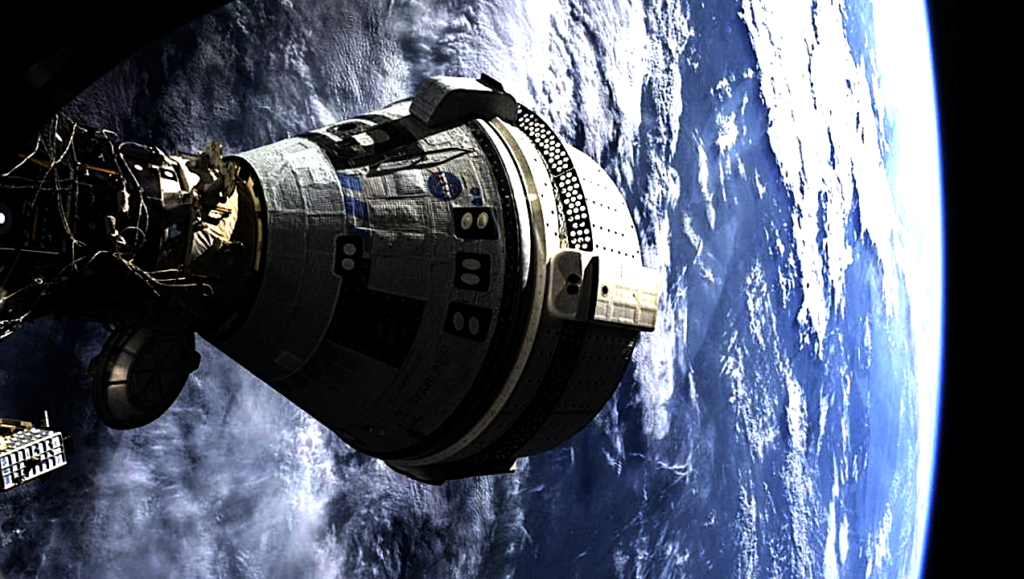
Falcon 9 Nails Orbit - First Stage Slams Hard into Atlantic

Space X update 4:53 pm EDT: Preliminary indications from NASA's recovery ship Freedom Star is that a debris field has been encountered in the area where the first stage was expected to be. Observation airfcraft confirmed the debris field. No parachutes were observed during descent. Apparently the Falcon 9 first stage hit the water rather hard. Initial impact location is 32 deg 07'N, 069 deg 15'W.

Space X update 4:40 pm EDT: Orbital info: Nominal shutdown and orbit was almost exactly 250km.  Telemetry showed essentially a bullseye: ~0.2% on perigee and ~1% on apogee.

141 Comments

| Leave a comment

I am sure that the SpaceX folks are disappointed that they didn't recover the first stage, but then again, that's something that they can work on for the future.

The most important part was that their bird flew straightaway into the correct orbital position and that they gained a bunch of invaluable data to analyze and further hone their systems with.

This is a good day for American aerospace. Perfect, not quite, but damned good.


Perhaps they need to hire some NASA entry/recovery folks to help with the recoverable booster.

Impressive - great job SpaceX. One question - was the recovery vessel Freedom Star operated by its normal contingent from United Space Alliance or will SpaceX be providing their own sailors and divers?

Bullseye

And that says it all. There seems to be some issues to work (the "roll thing") but clearly the test validates the notion of build a little test a lot and then fly some...and do it rather cheaply. It is the death knell for big government programs that take to long, promise to much and deliver to little.

Elon Musk and his splendid team have pulled off the equivalent of the Wright Brothers on Kitty Hawk.

enjoy the success

Robert G. Oler

Folks:

OK, let's here from the Spacex detractors on this one. Unlike the Shuttle solid fuel rocket booster which have much thicker casings recovering the Falcon 9 first stage is like recovering a pop can dropped from 30 miles up moving at mach 4.

tinker

Very nice launch. Congrats Space X.

Maybe the rolling interfered with parachute deployment.


Comparing to the Wright brothers?

Reeeally?

Hey, I am glad they succeeded and watched the launch too, very exciting stuff. But to make such comparisons is a little extreme. Yes it is a great accomplishment and I look forward to COTS materializing.

However...
Powered controlled flight did not exist prior to the Wright brothers.

Rockets to orbit? Yeah, that's been around a while now afterall.

Recovering the first stage would (maybe) help keep down the recurring cost of launches. Nice to have, but not a major success criterion. It's just the first flight.

Good job, SpaceX. They are a long way from being fully established, but it's a good start. Recovering the first stage is, in my opinion, a long shot. I would not characterize this as a death knell for big government programs, though. Their cost model has yet to be proven and they still have a couple of test flights and then some operational flight to get under their belt.

Nice to see Elon get his little rocket off the ground. But it's a far cry from being ready to ship cargo, let alone humans.

I believe the director of the Russian space project predicted 10 yrs. before it would be human rated?

"the equivalent of the Wright Brothers on Kitty Hawk."

You're joking right? I don't recall that Orville and Wilbur used a government subsidy to develop their "flyer". Besides this is not the first successful launch of a liquid fueled rocket which would be the equivalent of the feat at Kitty Hawk.

At any rate, congratulations to SpaceX for a beautiful test flight.

Nice to see Elon get his little rocket off the ground. But it's a far cry from being ready to ship cargo, let alone humans.

I believe the director of the Russian space project predicted 10 yrs. before it would be human rated?

Not to feed an obvious trolling attempt but, technically speaking, parachutes only partially failing after an expected overload situation is less of a problem than parachutes not working at all.

...but I've never been a fan of reusing things that were super heated then dunked in salt water.
I'd just be curious as to how it affects the bottom line if the first stage can be made reusable. Is this a problem they need to solve?

Folks:

Robert makes a very good point.

The Wright brothers built their own aircraft in their own shop with their own money. People told them it couldn't be done so they just kept their mouths shut and did it anyway.

The Wright brothers also studied everything they could on aerodynamics that was available. What they couldn't find they researched themselves, building their own wind tunnel and doing their own tests. Elon Musk didn't invent this wheel, he merely built a far better one from scratch.

Lots of parallels here.

He may end up with a far greater reputation then the Wright brothers down the road of time for what his company has started today.

tinker

I read that the folks that make the recovery system for Falcon are the same folks that do the recovery system for the SRBs (Irvin Aerospace).

Current Falcon 9 pricing is not dependent on recovering the first stage and reusing it. Their first goal is to accelerate their learning curve by studying the post-flight condition.

Regarding the Russian prediction of 10 years to man rate Falcon 9 - they wish!

The Falcon 9 is no "little rocket". It's a very capable mid-lift vehicle that is designed from the outset to be man rated. Also the debut of Falcon 9 is more like Michael Dell building affordable PC's than Orville and Wilbur at Kitty Hawk.

Congratulations to the outstanding SpaceX team. I can only imagine how motivating and energizing this success is for you all. Now on to Dragon, F1e, and F9 heavy! Yowzah!!

By the way, I'm also looking forward with excitement to see the response from Orbital and ULA, not to mention Armadillo, Scaled Composites, Bigelow, and Blue Origin. The door to space is opening more every day.

From CNN: "Friday's test flight was to last about eight to 10 minutes and is scheduled to deploy the mock Dragon capsule into a 155-mile orbit. It would orbit for about a year and burn up in the atmosphere."

So did they deploy the mock Dragon capsule in orbit?

Congratulations Space-X on a great success - placing the payload into the exact planned orbit with a low cost launch vehicle. Keep up the good work and develop for the USA a family of low cost launch vehicles!

It's disappointing that the first stage was destroyed. I know it's recovery was a low priority item for the flight but it would have been nice. It'll be interesting to know why the parachutes failed (or failed to open). The Falcon 9 first stage would certainly be a lot easier to damage than a shuttle SRB. I wonder if they have a system to maintain tank pressurization until splashdown? I would imagine that the unpressurized first stage is very ridiculously easy to damage.

I certainly wouldn't compare this flight to the Wright Brothers. However, it is a significant milestone in the history of spaceflight.

With regard to government funding, this was not a COTS flight. It was on SpaceX's dime (and they hired ULA to operate the recovery ship).

I think this is a good time to remember that total Falcon 9 development (including this flight) cost less than the Ares 1-X test flight alone.

Times they are a changing!

Aerin:

On this flight there was no spacecraft separation. The Dragon capsule and trunk stayed attached to the second stage. Since the second stage and capsule have no maneuvering thrusters it was probably a good idea to have just one piece of space junk instead of two. Spacex has plans to put their Draco thrusters (the same as they use on the Dragon) on the second stage. This might be more important on a satellite launch where they would need them for aiming and ullage during second stage restart.

tinker

"With regard to government funding, this was not a COTS flight. It was on SpaceX's dime (and they hired ULA to operate the recovery ship)."

Hummmm..according to Mark Wade at Encyclopedia Astronautica...

"In September 2006 SpaceX was named as one of two winners of the NASA Commercial Orbital Transportation Services competition. The SpaceX award was $278 million for three flight demonstrations of the Falcon 9 booster carrying the Dragon space capsule. These were to occur in 2009."

So who is correct, you or Mark? If it wasn't a COTS effort then where did the $278M go?

Congratulations to the SpaceX team.

Tinker has nailed it.

The trick of the Wright Brothers was of course powered lift...but most important it set the standard for how aviation would work in The Republic...a bunch of people with no real outside funding, self taught, and building a product that was not only a milestone but marketable.

The "space age" that has existed so far in the US was what any European or Communist country would have done...one that had "cost" or "marketability" no where in the portfolio.

There is an interesting comparision that most folks should go look at...as to how NASA did Syncom and how it did HSF...and why one is a massive success and one is failure.

If there is a true space age in The Republic, this will be the day that it started. Musk and his company demonstrated enormous maturity with this launch.

Robert G. Oler

No the trick of the Wrights was, according to Wikipedia, "with inventing and building the world's first successful airplane and making the first controlled, powered and sustained heavier-than-air human flight".

While SpaceX is to be commended for the great Falcon 9 test flight, it was not the first in any of its accomplishments and in no way compares to the feat at Kitty Hawk. Oh, and money came from the government to the Wrights AFTER the demonstration and not before.

Don't get me wrong, I believe that our tax dollars can be used to develop technology but afterall this is old geezer stuff (with the exception of the friction stir welding) and is still an ICBM shaped rocket using liquid fueled engines, yada, yada, yada.


There would be no SpaceX if NASA had not existed.

The Wrights pioneered so much on their own.
They were not standing on shoulders of giants as SpaceX is.

How come there were no applause for the ULA (a private company) launch on May 31st of the Delta IV? There was not one comment about the launch on NASA watch. Yet somehow the Falcon 9 is considered revolutionary?

What makes the Falcon 9 more revolutionary than the Delta IV?

Marcel F. Williams

I call BS on the Wright Bros analogy for the sheer fact that while they may have self funded and self taught they were not teaching themselves using 40+ of actual rocket launch experience/technology and know how. The wright brothers were doing things that had yet to really been done. Elon and his rocket scientist other than funding model are doing what Goddard, Von Braun, and others have all done before.

congrats to SpaceX, but certainly not the groundbreaking technical achievement you claim it to be.

I'm not sure this is one of the 3 COTS demo flights paid for by the $278 million COTS contract, I believe this one is on SpaceX. Although the true cost savings over other launchers is yet to be proven out, I have to say I was most impressed with the engine abort followed in an hour and 15 minutes by a successful launch. Had this been a Shuttle launch, there would have been a 3-week delay while all engines were replaced. Of course the Merlin is no SSME, but it shows a robust design and ops concept. This is not the first time SpaceX has recycled following an engine shutdown, at least twice before if I'm not mistaken (Falcon 1 flight and Falcon 9 pad engine firing).

CessnaDriver:

Actually (if you do your research) from their beginning Spacex didn't even think that NASA would be interested in them. They were going to cut into the commercial satellite launch business and use the profits from that to fund the Dragon program (which, as far as Musk was concerned, was the real goal). I've had a close eye on them since day one, even before they even picked a name.

COTS changed everything. Spacex did a quick (and expensive, I'm told) turnaround and put the slow development of Dragon into high gear. They didn't even think they stood a chance and yet they ended up on the top of the heap (as it were). Give Elon Musk credit for thinking on his feet and going with the flow.

Could Spacex have succeeded without NASA? You bet your butt! It would have taken longer, sure, but NASA would have ended up coming to them eventually anyway. Spacex is not taking a government handout, NASA is just the Falcon 9s first customer. There's a big difference there.

tinker

"There would be no SpaceX if NASA had not existed.

The Wrights pioneered so much on their own.
They were not standing on shoulders of giants as SpaceX is"

that is typical of the disinformation out there. SpaceX is primarily a company that is trying to gather the commercial GEO launch industry and move it back to the US.

The "COTS" effort is a focus point now because it is wrapped up in the space policy debate (such as it is) but Musk's main dollars are going or not going to come from commercial launches of uncrewed geo sats (or com sats). I bet he makes far more money off the Falcon 1E contract to fly Iridium 2 then he will off of people (at least for a bit)

Robert G. Oler

"The wright brothers were doing things that had yet to really been done."

so is Musk...making an affordable rocket is something that has not yet been done in the US...witness how much of the commercial launch industry ULA has.

What makes Falcon9 revolutionary is it cost


Robert G. Oler

Ok Keith Nothing of delusion for your blog

How it feels to me;

The Nation's First Scheduled Airmail Service, 1918
The Federal Government's initial experiments with airmail had been modest in scope and funding. That changed early in 1918 when, accepting a suggestion from the National Advisory Committee for Aeronautics (NACA), Congress appropriated $100,000 for the first regularly scheduled airmail service. The route was to cover 218 miles (349 kilometers) between Washington, D.C., and New York. In both directions, flights would land at Bustleton Field in Philadelphia for fresh planes and more mail.
NACA ORIGINS (1915-1930)
In 1915, Congressional legislation created an Advisory Committee for Aeronautics. The prefix "National" soon became customary, was officially adopted, and the familiar acronym NACA emerged as a widely recognized term among the aeronautics community in America.
The genesis of what came to be known as the National Advisory Committee for Aeronautics (NACA) occurred at a time of accelerating cultural and technological change. Only the year before, Robert Goddard began experiments in rocketry and the Panama Canal opened. Amidst the gathering whirlwind of the First World War, social change and technological transformation persisted. During 1915, the NACA's first year, Albert Einstein postulated his general theory of relativity and Margaret Sanger was jailed as the author of Family Limitation, the first popular book on birth control. Frederick Winslow Taylor, father of "Scientific Management," died, while disciples like Henry Ford were applying his ideas in the process of achieving prodigies of production. Ford produced his one millionth automobile the same year. In 1915, Alexander Graham Bell made the first transcontinental call, from New York to San Francisco, with his trusted colleague, Dr. Thomas A. Watson, on the other end of the line. Motion pictures began to reshape American entertainment habits, and New Orleans jazz began to make its indelible imprint on American music. At Sheepshead Bay, New York, a new speed record for automobiles was set, at 102.6 MPH, a figure that many fliers of the era would have been happy to match.
American flying not only lagged behind automotive progress, but also lagged behind European aviation. This was particularly galling to many aviation enthusiasts in the United States, the home of the Wright brothers. True, Orville and Wilbur Wright benefited from the work of European pioneers like Otto Lilienthal in Germany and Percy Pilcher in Great Britain. In America, the Wrights had corresponded with the well-known engineer and aviation enthusiast, Octave Chanute, and they had knowledge of the work of Samuel P. Langley, aviation pioneer and secretary of the Smithsonian Institution. But the Wrights made the first powered, controlled flight in an airplane on 17 December 1903, on a lonely stretch of beach near Kitty Hawk, North Carolina. Ironically, this feat was widely ignored or misinterpreted by the American press for many years, until 1908, when Orville made trial flights for the War Department and Wilbur's flights overseas enthralled Europe. Impressed by the Wrights, the Europeans nonetheless had already begun a rapid development of aviation, and their growing record of achievements underscored the lack of organized research in the United States.
Sentiment for some sort of center of aeronautical research had been building for several years. At the inaugural meeting of the American Aeronautical Society, in 1911, some of its members discussed a national laboratory with federal patronage. The Smithsonian Institution seemed a likely prospect, based on its prestige and the legacy of Samuel Pierpont Langley's dusty equipment, resting where it had been abandoned in his lab behind the Smithsonian "castle" on the Mall. But the American Aeronautical Society's dreams were frustrated by continued in-fighting among other organizations which were beginning to see aviation as a promising research frontier, including universities like the Massachusetts Institute of Technology, as well as government agencies like the U.S. Navy and the National Bureau of Standards.

What was first Today?

SpaceX Launch Control was located on US government property via use/lease contract. The launch was conducted by SpaceX
Mission control was at SpaceX HQ in California, private property, using the internet for communication with the public and business.

The Wright Bros invented heavier than air flight. Governments invented manned spaceflight. Can Space X do what a private company like Energia is already doing? We will see.

I'm just wondering if Obama will place a carbon tax on their hydrocarbon fuel by the time they're ready to fly humans:-)

Marcel F. Williams

Heh... before this stunning David vs. Goliath success, they were all "SpaceX doesn't even know what it doesn't know" and now they're all "what's the big deal, rockets are old hat."

The Wrights' achievement was much more fundamental, but SpaceX's private approach is lightyears closer to the spirit of the Wrights than NASA's achievements, historic as they are. In that sense, NASA is the Robert Langley to SpaceX's Wrights.

A more apt analogy might be Apple Computer. They didn't invent the thing, but they changed the world with it. They put a lot of the Old Guard out of business. Boeing and Lockmart should make sure they emulate IBM, and not DEC.

Wups, make that Samuel Langley.

So "possum" that $278M has just been sitting in an Elon Musk/SpaceX bank account since 2006? Yeah, right.

while Apple can survive on 5% of the PC market share I doubt Elon will be able to build a business if that is all he is able to capture.

Energia created the real revolution when they launched the first space tourist into orbit. Space tourism will dwarf any government commissioned manned spaceflights in the long run-- especially NASA's 5 manned flights per year.

Marcel F. Williams

Quit kidding yourself "punder", using any taxpayer funds precludes (by definition) this being labeled a "private approach".

Congratulations SpaceX.

It was a fantastic launch, a great day! Hopefully this is a sign of things to come. And Keith, thanks for contacting Emily on my behalf awhile back regarding some of the frustrations a few of us were having. Everything worked out and here's the reward, for all the readers here to enjoy. I don't like posting links to any of my own work on other people's websites, but I was fortunate enough to shoot the launch from the roof of the KSC VAB. Since there were issues with the webcast today, I figured I'd share these with everyone who might not have had a chance to see the actual launch:

SpaceX Falcon 9 First Launch As Viewed From The KSC VAB Roof (Tight Shot)

http://www.youtube.com/watch?v=Ah2NPfGR4dA

and SpaceX Falcon 9 First Launch From KSC VAB Roof (ZOOMED OUT View)

http://www.youtube.com/watch?v=3pOegGGHrP0


I hope everyone likes them. Give thanks to Keith since he intervened on my behalf.

Matthew Travis


Hi Mike

There are 3 COTS flights that were included in the COTS funding, but this flight is NOT one of them. SpaceX chose to do this extra test flight on their own dime. The next 3 flights of Falcon 9 will all be COTS flights.

Falcon 9 is so good there is nothing to talk about but whether Elon Musk is like the Wright brothers? Groan.

+ "a private company like Energia"

Keep up the good posts guys. LOL

Apple could be gone for all I care. I'm talking about the transformation of the computer industry from a small, insular one to... well, an industry that lets a bunch of boneheads, thousands of miles apart, discuss space policy over their laptops. If you don't get it, sorry.

And to the guy who asserts that a commercial company selling to a government ceases "by definition" to be private...

"You keep using that word. I do not think it means what you think it means."

Mathew:

Thank you so very much for those videos!

Really awesome work on the tracking vid, stuck with 'er all the way.

That is on clean rocket!

tinker

Yeah. The majority ownership of Energia is private. I guess you didn't know:-)

And what primary private customer is Space X trying to sell it services too? Oh Yeah. NASA:-)

Marcel F. Williams

Elon, thy name is Delos.

Yes, of course, "commercial" space is still a few years away -- when there is a consistent market besides NASA. In the meantime, this launch did break ground in a way NASA cannot: can anyone on Earth imagine NASA experiencing a pad abort and launching the same vehicle 2 hours later? Don't tell me, "Yeah, but Falcon wasn't a manned..." -- there was plenty riding on this launch, whatever SpaceX's company line. They did good; they put a spacecraft in orbit, in the planned orbit, and while it has been done before (with a Cold War driven government behind it), this is different. Franklin Chang-Diaz got his VASIMR engine from Technology Readiness Level from 0 to 2 in 25 years on the government dime; and from 2 to 6 (flight ready) in 5 with support from the private sector. As far as the argument about commercial space companies not being safe, can anybody on Earth imagine a Branson or Bigelow pursuing any project that doesn't support the idea that killing your customers is probably not a good business practice? While today might not have been a Kitty Hawk, it is, as someone once said, "a celebration of freedom—symbolizing an end, as well as a beginning—signifying renewal, as well as change..."

The Dragon is not needed for roll control. One of the cool things about the SpaceX engines is the exhaust from the burner that is used to power the turbopump exits from it's own nozzle next to the main nozzle and this is used for roll control. Really nice solution.

This was not a COTS flight. This first test flight was totally at SpaceX's expense. The original plan was to have the payload faring on this vehicle but they decided to fly the Dragon qualification vehicle instead. SpaceX does have commercial orders for Falcon 9 but obviously they're putting all their efforts into fulfilling their end of the COTS contract.

Marcel... I'm not sure why you think there should be any applause for ULA on the Delta IV launch (other than the usual for a successful launch). The Delta IV EELV is not a commercial launch vehicle. It's only customer is the U.S. government. It is not available (or even price competitive) to commercial customers. It was developed with large amounts of government funds and still exists due to government subsidies. There is no comparison. As for your point that Energia is a private company... well, that may be technically true at this but it ignores so much history as to be, well pointless. At least they do have some commercial customers. Regardless, they're partially owned by the state and their operations are heavily subsidized.

The success of the Falcon 1 program has been historic. This successful flight is nothing short of earth shattering. ESA, NASA, Boeing, Lockheed Martin, Energia, Orbital... they all know it. The game has changed. For the better I might add.

Ad Astra!

I had to make a trip to Gainesville today so I was upset I missed the actual launch but that video is excellent. I found another online but there is like a kids screaming in the background but it shows some actual rocket views it screaming through the atmosphere and so fourth from the perspective from the top of the rocket and even shows 1 stage separation. I will say its glitchy as hell and lags.. but its neat. It sounds like someone is setting a table in the background and you can hear a TV.

http://www.youtube.com/watch?v=NREJEZ5eluk


Great Job Space X your launch Manifest is pretty heavy for the next several years I hope your up to the task..

And I also agree with the one person who said.. its not true commercial .. its not really when the US government shelled out a chunk of cash to them.. When its truly privately funded like Branson and his little sub-orbital space program then its truly commercial.Plain and simple commercial business are made to make money and until you can turn a profit its hard to call a commercial business a success.

Damn The Gravity!

One other thing to remember is this was 10 flight tests of the Merlin Engine.

If the costs end up being in the $50M range this requires a change in Exploration Strategy to one using all Medium Class Launch Vehicles. $50M to put about 25,000 lbm in LEO. There is no way NASA should spend any money developing a Heavy. If development costs $10B that is 200 launches or 5 million lbs of payload. Would you give up 5 million lbs of payload in LEO for $10B?

Here is a comparison. Supposes there were no such things as an 18 wheeler but only those little 10 ft box trucks. And suppose you wanted to start a moving company. Which would be better spending $10 million to develop a truck to move people in in one trip or buying a bunch of existing small trucks for $25k each?

Let's get away from a heavy and start thinking how to take advantage of these existing rockets and get out of LEO already.

And who do you think Space X's primary customer is? In fact Space X sued Boeing and Lockheed back in 2005 in order to attempt to get its share of government contracts. Elon Musk is obsessed with trying to get his hands on tax payer dollars.

There's nothing historic or Earth shattering about this launch. This is not even the first time Space X has launched something into orbit. So how is this launch more historic than their first launch into orbit on September 28, 2008?

I'll give you an Earth shattering launch, April 28, 2001 when Dennis Tito became the first paying space tourist in the history of humanity. Space tourism will change everything!

Marcel F. Williams

This is an incredible accomplishment. In 8 short years SpaceX has has put a demo capsule in orbit. I am guessing that most of the carping are coming from NASA types. I just spent 3 years on Orion in which we accomplished ????. I am now working on the 747-8 - the progress in past 3 months is equivalent to the last 3 years on Orion. I know - commercial aircraft is easy compared to human spaceflight - but come on. My hat's off to SpaceX. Congratulations - continued success. When one spends his own money - one spends it wisely.

The fact that they had a pad abort at T-2 then turned it around so fast shows they have an impressive system and a good understanding of the vehicle. And some cool rocketcams!

Consider the trade:

One 18 wheeler to carry one large, massive item (to a remote site) versus 10 cargo vans carrying multiple small, low mass things, (assuming that the big item could be broken down conveniently) then assembling the small things back into the big item at the remote site.

SpaceX started both the Falcon 1 and Falcon 9 programs to serve commercial customers. They certainly hoped to get government business as well but it was not critical to the success of the company. They did take some government money (U.S. Air Force for a Rapid Response Program study and DARPA for demonstration launches) but it was a very small piece of the pie. Falcon 1 and Falcon 9 were developed with private funds (with only fractional government milestone/service based investment). SpaceX has a business plan that works without government contracts. They did sue Boeing and Lockheed Martin in an attempt to gain business that was going exclusively to ULA. That's simply smart business. NASA only recently became involved via the COTS cargo program. Even with that, most of the funds are for services, not development.

I know what point you're trying to make but it doesn't hold water. It's like saying that Virgin Galactic isn't commercial since they're going to fly people and payloads for for NASA and other government agencies.

Take away their exclusive, subsidized government business and ULA shuts down the EELV program and disbands. They have no other business case. Take away COTS and SpaceX continues on with it's commercial launch business. There is no comparison.

This is more historic than the Falcon 1 launch because of the level of complexity and the capability of the vehicle. Falcon 1 is a niche low mass launcher. Falcon 9 (and by extension Falcon 9 Heavy) is capable of orbiting large commercial satellites, government satellites, large research spacecraft and probes, pressurized cargo and crew. It can do so at a very competitive cost and it's development time has been very short.

Dennis Tito's flight was history but not historic. It happened simply because the Russian's needed money and would do just about anything to get it. The only doors it opened were for the $20M+ flight club. It'll be a footnote in the history of spaceflight. The story of SpaceX will be a chapter all it's own.

Constellation and Orion were on a different path. They had to meet their own set of safety and mission requirements which made for very different problems. Its not like they wanted the thing to be over budget or behind schedule.

Know how just before the SpaceX launch (when we were staring down the usual 40% chance of dismal failure) everyone was saying "don't read too much into what is about to happen, its just another step in the journey, etc..."?

I think that is the right perspective for the aftermath of a success too.
This is a very important day for SpaceX and their arrival to the launch market as a viable competitor. But this is no more a revolutionary space vehicle than Ares at this point, because the real revolution will be in successfully carrying passengers for a fraction of the traditional price.

They have to wade through NASA's nebulous man rating standards, finish the Dragons development, and get the whole stack to market with no cost surprises or major delays.
...and that will certainly be a revolution for the history books when it happens.

To those of us who have been helping and cheering emerging commercial space for years and years, today's Falcon-9 launch was almost too awesome for words.

I loved watching the feed and hearing the SpaceX team cheering in the background at key moments in the flight -- they certainly deserved a chance to cheer after all their hard work.

Now for a full launch with a functional Dragon capsule. Can't wait to see it splash down in the pacific...

As far as the level of complexity is concerned, Space X failed to recover their booster.

Space X has a long way to go (putting people into orbit and bringing them back to Earth safely) before they can compete against a company like Energia (the only space tourist company out there).

Marcel F. Williams

"As far as the level of complexity is concerned, Space X failed to recover their booster."

That's about the weakest response I could imagine. It's no better than those who nitpicked Arex 1-X because of the SRB parachute failure. However, their failure to recover the liquid fueled first stage (which has never been done before) certainly negates all the secondary objectives of the flight like launch, staging, second stage performance, and achieving orbit. None of that stuff really matters after all compared to the loss of the first stage...

SpaceX does have a long way to go. However, they're playing by a different set of rules.

Energia? Sure, same deal right? Isn't SpaceX also a former government design bureau with decades of experience, partial state ownership and a business case that rests solely on government contracts? Oh, wait, maybe not.

I'm sorry Marcel. I used to respect your comments because they usually had substance and were well reasoned. That no longer appears to be the case.

Been talking to Senators Hutchison and Shelby lately?

Editor's note: either you have not paid much attention to SpaceX or you just do not care. Musk said that recovery is a "nice to have" but that their business model assumes that no stages are ever recovered. Their prime objective was to launch the rocket - not recover the stage and they said this over and over again. Ares had recovery as a prime part of their overall mission operations. But I suspect facts are something you are not really interested in.

Ok, I must admit I'm curious. What exactly is this "Dragon qualification vehicle" people keep talking about? Is it a mass simulator/form factor mock-up like the Ares I-X dummy upper stage? If so, can I call it the Dragon I-X?

Seriously though, what exactly did SpaceX put up in orbit today? What is the fidelity of the mock-up?

"Quit kidding yourself "punder", using any taxpayer funds precludes (by definition) this being labeled a "private approach"."

By this standard there are very few "private" companies in existence.

There is no shorthand for describing the financing, "private" "commercial" "government" "taxpayer-funded", which satisfies everyone. (When I spend my income tax refund I'm literally using taxpayer dollars!) When anyone invokes Virgin Galactic, I usually point out that the voters of three low-income counties narrowly volunteered to provide the infrastructure--Spaceport America--upon which Branson's business case is based. We are all connected.

"SpaceX failure on first launch!! - Falcon 9 first stage destroyed upon impact with ocean!! News at 11 !!"

June 4th 2010 was a good day. It was a babystep in becoming a spacefaring planet. Humanity will reach out to the stars. Thank you Elon, and to anyone who works at SpaceX or helped them do it, THANK YOU!

Where's the big red X? The program is in trouble technically, over budget and using tax payer money for ops.

Congrats SpaceX!

Apologies in advance if this is considered spamming-

Here's "Falcon 9, the Day After"

http://nasaengineer.com/?p=180

It seems the media didn't have much interest in talking to anyone but Musk and people in congress, with a few exceptions.

> can I call it the Dragon I-X?

It was an incomplete Dragon... maybe this will spur your imagination http://www.flickr.com/photos/jurvetson/3721106500/


PS: Editor, that guy was just being sarcastic

Awesome SpaceX ... just awesome!!! And thanks for the Webcast. I was honored to be able to follow the flight from the comfort of my home. Congratulations to you all ... and let the next chapter begin.

Better press agents?

The Wright Brothers analogies are amusing to me; and even more amusing is the claim that they somehow invented heavier than air flight. In fact, they did not invent it, per se, they perfected what others were already working hard on. Their difference was their invention of "wing warping" which allowed for controlled flight.

History shows that the Wrights were not the first to attempt or achieve powered flight. Félix du Temple de la Croix was a French Naval officer who patented a steam powered heavier than air flying machine that flew in 1874. Sir Hiram Maxim flew in 1894.

The difference? Their flights were uncontrolled and essentially ballistic, but their machines were heavier than air and they did fly.

Richard Pearse of New Zealand is probably he true father of controlled powered flight, and he succeeded in doing that in 1899 and did so several times prior to the Wright Brothers successes in NC in 1903. Pearse never commercialized his aircraft, nor did he patent or document his work as thoroughly as the Wright Brothers, and he was not helped by the remote location of his work, however, reliable witnesses from the time did back what he did.

The Wrights did invent a better mousetrap, and they were ultimately successful in weaponizing powered flight after some doubt and resistance to their ideas were overcome in the military chain of command. But as inventing powered flight? That's patently false.

So who is Musk the most like?

I am surprised that none of you have stated the obvious: Robert Goddard, the man who invented liquid-fueled rocketry and the man who was is probably the father of modern rocketry. Goddard by no means invented the idea of the rocket, but he took it a revolutionary leap forward and blazed a trail that eventually led to the moon.

Musk is also blazing a trail, one whose destination is yet unknown, but he has proven that a private concern can and will build worthy spacecraft at a relatively reasonable price.

I'm going to watch Iron Man again. Musk is Tony Stark.

I wonder if Jarvis will be the crew on the next launch.

:)

As for years of experience the company may not have been around long but this isn't a group of new college grads building a rocket. Most of these people have years experience in this mature field that knew that there had to be a better and cheaper way to launch rockets and had the balls to put their career where their mouths were.


This is a perfect example of building a small highly motivated team with a defined goal, schedule, and budget. This is most likely a reason why it worked.


One things I have noticed working with NASA is the shear number of people you must communicate with for almost any project. This makes it much more time consuming and expensive then my experience in the real world.

Congratulations SpaceX and all those involved! This is awesome! And I cross my fingers that Elon Musk's financial problems don't hinder progress.

Why are people comparing SpaceX to Wright Brothers and Goddard? The Wright Brothers and Goddard are people. SpaceX is a company. Elon Musk didn't personally engineer the Falcon 9. He hired people and contractors to do it. One example I know of is that he contracted out some of the CFD work. And since the knowledge is out there, I'm glad SpaceX didn't trail blaze alone.

Editor: I agree with RC, Poster Mike Schrieber was simply being sarcastic in his reply to Marcel Williams/New Papyrus.

It seems Mr Schrieber gets it regarding any nitpicks of this near perfect first test launch.

Regarding the term Commercial- Just about every large firm sells something to the government. One easy example- IBM sells computer services to governments at all levels- and one would argue that the national labs subsidize IBM's Blue Gene series of computers etc. It is considered a "national good" to develop and use use these near Petaflop level machines- and the commercial side of IBM of course benefits, both directly and indirectly.

What is wrong is when supposed commercial companies like Boeing and Lockheed get so used to large cost plus contracts that hustle, innovation and ole' fashioned "gumption" are lost. I dare say that Kelly Johnson's Skunk Works could have done something lean and mean like this- but I don't know if I can say the same thing about today's parent (very Defense dependent) company.

If we really are concerned about other nation's space faring capabilities, then I say, The more US based, nimble, innovative competitors the better.

Go Space X (and all companies like it)

You think that this is an insignificant historical event? I would compare it more to the Kelly Act and airmail than the Wright Brothers, but it is very significant.


Daniel Bernoulli, Claude-Louis Navier, Jean le Rond d'Alembert, Lord Rayleigh, Emanuel Swedenborg, Sir George Cayley, John Stringfellow, Charlie Taylor and many others find your lack of appreciation for aviation history to be bitter and sad.


Without the efforts of hundreds of scientists, tinkers, visionary's and complete nutjobs, the Wright Brothers would not have been successful. Others learned, tried and died to make their first flight a success. To think that they did not borrow from the lessons of history shows a lack of understanding of what really happened that one blustery day.


SpaceX has the benefits of the lessons learned by NASA and dozens of Aerospace organizations.


Congrats SpaceX, I hope that this round of commercial efforts will fair better than those of the mid nineties and AMROC.

@Space4US

But remember that nothing exists to be put into orbit yet. So the large massive thing isn't designed yet. So do we spend 5 million lbs of payload in LEO for the ability to put up things in big chunks?

IMO, the question isn't whether Elon Musk is the Wright Brothers. It is whether he can become Henry Ford.

By redesigning the automobile for assembly-line manufacturing, Ford transformed its cost dynamics from a circumstance where only a rich man could afford one, to a new paradigm where the average American could. This transformed America (and the rest of the world).

Musk isn't introducing assembly-line manufacturing for launch systems, but he has attempted to introduce a launch system with improved cost dynamics.

Those that are advocates for space exploration should know by now that we need a paradigm shift in the cost dynamics for ETO. Musk still has a long way to go, but we should all be a little bit more hopeful after yesterday's successful launch of the Falcon 9.

Great job, Space X!

A former Soviet design bureau, longtime tool of Communist domination, created by Stalin's "government" to send atom bombs to New York, opportunistically (and desperately, for cash) flies a few tourists now and then because our own space culture has systematically excluded private ventures for decades; and it's superior to an American startup run by a guy who openly states his goal as space settlement?

That's got to be the most amazing statement I've read on any of these forums so far! You win, sir!

Is the Estes Model Rocket Company still in business? As a kid I loved sending those little rockets up. Never had the second stage crash into the ocean but my mouse came home safely.

Folks:

Here's an interesting little tidbit. On the glitch free video of the Falcon 9 launch from Spacex, second engine cut-off happened at around 8 minutes, 40 some seconds. Fully 40 seconds before what Spacex told us... and it still made it's target orbit. Now I know the stripped down Dragon capsule was a light payload but I wonder if Falcons performance exceeded Spacexs expectations. Even though the first stage separation was on time it may have been at a higher altitude than expected. Better performance means more payload, better margins or both.

When looking at the video, it seems that the first stage was still in line with the second stage engine when it fired up. Even at a few hundred feet the engine exhaust in the near vacuum could have damaged the recovery system. My guess is they would have to deploy a guiding chute pretty early in the re-entry sequence to minimize the stages profile for that first slam. I know what it's like to hit the water at thirty miles per hour while water skiing, it's like hitting concrete and it's the belly flops that knock the wind out of you. Maybe that's why the first stage broke up.

Just some thoughts:

tinker

Is the Estes Model Rocket Company still in business?
I do not know you can do a internet search if you wish.

After playing with the Estes rocket engine. I started making my own with KClO3. Then moved on to kerosene and compressed O2.

I even had my own Titan Rocket from the Aerospace Corporation.

why did you fly a mouse? I used frogs.

I didn't have a frog. Congress had not fully funded the project and I couldn't afford a frog.

Congrats SpaceX!

The more launch capabilities we have in the US, the better off we'll be - hopefully this will allow people to realize that. Looking forward to what (if anything) OCO and ULA do in the future.

Being a private company, SpaceX definitely shouldn't be the political football that NASA is. Capabilities and designs have been taken away or cancelled merely because it was the current administration/management's capability or design. Hopefully long-term goals are better achievable with the more private companies.

My only concern is, since SpaceX builds much of their components themselves (again, NASA is obligated by law to contract out) and is relatively small, how much knowledge could be lost if someone retires. That's not really a question for today though, at all.

Of course it was sarcastic! I'm sorry Keith but you should take a moment to more throughly review a post and it's context before chiming in with the big bold letters from above.

In case you missed it, the Energia versus SpaceX comparison was also sarcastic... just wanted to clear up any possible doubt...

"Editor's note: either you have not paid much attention to SpaceX or you just do not care. Musk said that recovery is a "nice to have" but that their business model assumes that no stages are ever recovered. Their prime objective was to launch the rocket - not recover the stage and they said this over and over again. Ares had recovery as a prime part of their overall mission operations. But I suspect facts are something you are not really interested in."

from the days of the railroads,large and new enterprises have been private public partnerships.
Ariane and Proton are private public partnerships from across the Atlantic.

Intelsat was such a creature and GPS could be said to be a private public partnership just with a different structure.Much to my amusement a lot of you argue over what form is taken in the method that you feed at the trough supplied by the taxpayer.
Atlas and Delta are not really purely commercial.In house NASA culture is not commercial ether.Space X and orbital are not truly commercial.And now in the proposed budget,Bigalow will become a government contractor.
But you see I am OK with this.I want my tax payer dollars to engage in private/public partnerships to both explore space and to commercialize it,HOWEVER I want both partners to be entrepreneurial about how the partnership is structured.NASA and Direct belong to cultures that have failed to produce sustainable launch architectures.NASA should funnel tax payer dollars to vehicles that may one day be commercialized and that are safe.
That means that the semi commercial EELV, Delta and Atlas should launch commercial crew,exploration crews,and expensive science payloads.Space X and orbital should launch commercial cargo and commercial fuel to a commercial fuel depot.
after 2025 the commercial crew and commercial cargo and fuel would be rebid and Delta and Atlas would face competition for human crews from anyone who can demonstrate a successful launch vehicle.
The presidents budget proposal has now made its way to request for ideas,one is that any new hydrocarbon engine and in space engine be shared with the entire community,this means that some form of Delta or Atlas super heavy will be the human exploration launcher, fuel depot may limit its overall size to under 100 MT to LEO.This is a good thing! A smaller super heavy keeps the commonality in the EELV family closer to the ideal size needed to keep the use of this family in common with the entire community of users.

Foks:

Another tidbit. Seem a lot of folk in Australia saw a "UFO" at about the time the Falcon 9 upper stage/Dragon capsule would have been moving into sunrise. I did my own checking, the timing and course pans out. What they saw was a spiral around a bright point like last years Russian missile failure seen in Norway. Unless Spacex tumbled the stack on purpose, it could be that Spacex lost control over the second stage ounce it made orbit. Spacex has said that they "burped" the second stage engine but I still can't find any info on whether the second stage has reaction control thrusters. We'll have to wait and see I guess.

tinker

The easy part is putting something into orbit. The US, Russia, Japan, China, the EU, India, Israel and Iran have all done that. And Space X has also done that before.

The hard part is putting humans in space and bringing them safely back to Earth on a routine basis. Calling this a revolution is like calling last year's launch of the Ares I-X the invention of the year.

A lot of gliders flew into the air before the Wright Brothers actually flew a man. Space X is still in the glider stage.

But there's no logical reason why Space X or some other private company shouldn't be able to eventually transport people into space. The question is, how much is it going to cost to finally achieve that goal and is there a market for such manned flights beyond the Federal government.

Marcel F. Williams

"The question is, how much is it going to cost to finally achieve that goal and is there a market for such manned flights"

Also, when would a private company be capable of carrying humans into space.


There are so many proposals flying around, SpaceX, Constellation 2, Shuttle Derrived, etc.. I'd like to see some smart bean counters get close to the implementation details of each of the contenders, BOMs, headcount, etc.. and calculate the merit factors in terms of cost per kg to LEO or TLI. What is to prevent a company from low-balling a contract for LEO and then going out of business or breaking the contract because it underestimated?

"What is to prevent a company from low-balling a contract for LEO and then going out of business or breaking the contract because it underestimated?"

I think we've already seen this. It was called Constellation/Orion/Ares 1. It was simple, safe and soon, with a first orbit by 2011 at under $10B.

They passed $10B on the way to $100B with a likely delivery date of 2018.

I think the smart bean counters calculated the merit factors and pulled the plug.

> I am surprised that none of you have stated the obvious: Robert Goddard

Since you brought it up, I pick Elon Musk == Henry Ford. Cheap cars, cheap rockets?

Demonstrating the technical acumen to build and launch a new rocket and then later augment/transform/modify it to accommodate Humans is not in question. Clearly, as the Falcon 9 success demonstrates we have the technical brains in the country to pull of such endeavors.

What remains to be seen is if the capitalism/market economy as force will sustain the HSF aspect of the Merchant 7/Obamaspace intentions.

If government needs to prop it up to keep in going, or 'bail it out like GM' (to quote Bolden) then today's success demonstrates nothing .

I think the white elephant in the room is that the NASA folks can't stand to admit the fact that if they were given the same amount of money that space-x was given there is not a chance in hell that they would have achieved the level of success that space-x has already achieved with their current launch.

Someone please remind me that last time NASA built a rocket from scratch and it reached orbit. Be specific with the rocket and its costs. Point to anything that is comparable to the space-x rocket. I bet the NASA version cost at least 100 hundred times more to develop.

NASA's time has past. 45 years ago it was cutting edge. Now it is just high-tech government welfare.
Something really, really needs to change and I hope efforts like the one of space-x and cots lead the way.

RC:

I mentioned both Henry Ford and Robert Goddard in a post on the "Falcon 9 Reaction" thread here today. Good call... and, in Henry Fords case, an American success story folks can sink their teeth into.

Cheers!

tinker

No doubt about it. We are seeing and emerging new space race.

The race is not between NASA's Constellation lunar program and China's or India's programs.

NASA is not even involved.

The race is between US industry and foreign industry. And its not the usual US aerospace industrial giants. They got a bit too used to sucking on NASA's teat. It made them lazy and lethargic.

With good ole' Americans like Musk, we might be able to give our competitors a run for the money in one last gasp for American aerospace.

NASA needs to start reinventing itself.

Rats. I thought that I was the first today to bring up the comparison to Henry Ford and what Elon Musk is trying to do...

> And who do you think Space X's primary customer is?

Iridium.

Do you seriously think that most people at NASA wanted to stay at LEO for the last 28 years?

NASA does what the politicians tell them to do. If President Nixon or President Obama tell NASA not to go to the Moon and the Congress agrees with them, then they don't go to the Moon!

Do you seriously think that Space X invented rocket technology all by themselves with no thanks to government research and development over the past 50 years? Please!

And we still don't know how much its going to cost for Space X and other companies to routinely launch humans into space and bring them back safely to the Earth. And we won't know until they finally manage do it.

Marcel F. Williams

NASA has to operate under certain obligations, such as using contractors, such as Boeing. Boeing than hires subcontractors, and so on and so on. This always leads to high costs, especially since contractor managements often get cost plus contracts. This has become somewhat of an 'assumed' way to operate, and so having SpaceX build their own components (don't know exactly what those are) is extremely interesting and a good direction. Much more flexibility that way.

As to NASA building a rocket from scratch - I'd guess Saturn? That literally was from scratch, there was nothing for them to really base designs on like we now have today, no lessons learned, no people with much prior experience. That was from scratch. SpaceX has had your mentioned '45 years' of previous rocket development and history to build their rocket. But I think I know what you meant. This is where you insert some snarky comment about why, then, can't NASA develop a rocket now also? My answer - the above mentioned no-flexibility problems and an 'established' way of doing things that often seems at odds with intended goals. Similar to when new laws are passed - the old laws don't go away, they just get superceded but still 'exist', so you end up with a huge mess.

People seem to forget here that NASA does more than just launch vehicle development. Launch vehicles is relevant discussion right now, but people's frothing at the mouth sometimes lead to questionable statements (of course, this is to be expected on the Internet).

I think you'll have a very hard time finding anyone who would agree with that statement.

"The easy part is putting something into orbit."

Nancy:

Don't worry. It's not who's first that matters but who gets the job done, right?

Great minds...

tinker

Power of the undeniable counter-example.

This very successful first flight of the Falcon-9 changes everything, politically. Political detractors (e.g., Hutchison, Shelby) are going to look more and more foolish as they try to deny this new reality.

Can't wait for the next launch of the Falcon-9 C1 and the full exercise, including re-entry, of Dragon. This is the way space is meant to be -- exciting, engaging, and full of future promise.

What a difference from Constellation and Ares...

Wright Brothers? Goddard? Both are absurd. Elon simply took existing technologies, cut out unions (like UAW at Michoud), and cut out the embedded bureaucracy. Of course it would be great if all of this amounts to a profitable concern, but to compare the achievements of the Wright brothers or Goddard to this is utterly nonsensical.

Did we observe any new technology being flown on this flight that I was not aware of? Let’s see – Kerosene as a fuel? No, not new. Friction stir welded tanks? No, not new – been doing it on ET for years. Faster time to develop? In fact, development of Falcon 9 began in 2005 – so it has taken them 5 years to put together this partially functioning system.

I want to say that this launch was a good thing, and I am happy that they were successful in their launch test, but it is not the breakthrough that everyone is carping about. Once NASA burdens SpaceX with human space flight requirements, we will see whether the SpaceX team will be able to deliver on their cost model and remain profitable.

Until they are transparent with their tech and cost data, everyone is merely speculating whether they are achieving what they expect to achieve. Until then, I view Elon Musk as Elon Musk. His primary objective (like with Tesla) is to achieve some moderate successes (Tesla roadster does not come close to achieving mileage/ performance targets, transmission flaw necessitated initial offering with single speed trans., etc.) to market his product and obtain more funding from investors and government sources. How many roadsters do they need to sell to repay the $485 mil loan from CA? I suspect he does not care and will sell his stake shortly . . .

Mike -

You said "I think you'll have a very hard time finding anyone who would agree with that statement" in response to "NP" statement "The easy part is putting something into orbit."

I think he's right - while getting something into orbit is a major accomplishment, getting it, and more importantly it's payload back in one piece is a few few steps up on the scale of difficulty.

One thing about the Falcon 9 flight that comes as a great relief to me is that it happened without any attempts (that I'm aware of) by other interested parties to stop it from going forward.

At the risk of sounding like the silly plot of a B movie, Boeing, LockMar (and others) with their lawyers, and with the help of the pro-Constellation politicians, could have found a number of reasons for attempting to block SpaceX's test flight.

They may not have been valid, logical reasons, but how many judges are also aerospace engineers; it could have been easy to scare a judge into signing the paperwork that would have shut the SpaceX launch down.

The fact that I haven't heard any stories or rumors that anyone attempted such a shut-down is something I find encouraging. It shows more maturity on the part of politicians and aerospace management than we would have seen 10 years ago.

Please consider this to be strictly my personal opinion, and it was not aimed at anybody in particular.

Its a lot easier and cheaper to put an unmanned payload into orbit than it is to place a human into orbit and to bring them back safely to the Earth. A lot easier.

Marcel F. Williams

Actually Tinker, the first stage separates at mach 8.5. The problems I believe with its return are that the engine skirt is some 15% larger than the cross section of the tanks, which would cause the stage to wobble and tumble, leading to bending forces which would rupture the tank because that skirt will move the center of pressure too far forward. They are going to need to mount a ballute or some other drag producing device up at the transtage to deploy after separation to move the CoP back toward the tail.

Folks, this persistent competition of whether NASA is better or commercial is better is all mute. NASA has used commercial for years. No, this is not about any of that. The crux of this is purely political. It is Obama wanting to caste a shadow on Bush's goal of reaching the moon and ultimately Mars. Obama figures that anything he can do to degrade Bush gives rational basis for his degradation the U.S. space program and ultimately the U.S. Think about it. Obama runs around the world apologizing for us being the great satan, runs the deficit up so high that it cannot possibly be sustained, puts private businesses under government control and soon will raise taxes.

...I really don't want to think there is that much animosity between engineers.

Yes it would have been politically convenient for some if the rocket blew up, but everyone understands the first time out with a new ship means dealing with alot of unexpected problems. People would have seen through that criticism before the wreckage hit the ground.
What the old primes are selling on is capability and experience. They will still have that over SpaceX long after its begun launching customers.

To the contrary it seems there has been quite the helping hand extended to SpaceX in the form of equipment and guidance.
Maybe Elon thinks the world is scrutinizing him too closely, but boastful talk tends to trigger the public curiosity.

"Its a lot easier and cheaper to put an unmanned payload into orbit than it is to place a human into orbit and to bring them back safely to the Earth. A lot easier."

True. Also, designing hardware and electronics that can operate under hi-rel conditions for extended periods of time is very different than that required for boosters. I suspect SpaceX will buy as much as they can, but like the flight termination system, unless it's a proven design by engineers with hi-rel experience, its reliability would be questionable. I think it can be done, but again this will take time.

"Obama figures that anything he can do to degrade Bush gives rational basis for his degradation the U.S. space program and ultimately the U.S. Think about it. Obama runs around the world apologizing for us being the great satan, runs the deficit up so high that it cannot possibly be sustained, puts private businesses under government control and soon will raise taxes."

Alright Rush Limbaugh, enough with the crazy juice.

Way to go, SpaceX! What a beautiful launch!

If they can sell this capability for $50M a shot and continue to find the resources to evolve it into medium+ and heavy configurations (at similarly discount pricing), then I think we're in for a major shakeup in US launch services.

The evolutionary development approach will pay dividends as will the commonality of systems across vehicles and stages. Now, maybe, the rest of the entrenched industry will scratch their collective heads and try to be competitive. Whining about the loss of cheap ammonium perchlorate is not the answer.

SpaceX is only somewhat about existing markets. Falcon is predictable/affordable enough to be game changing. This is where the "PC" analogy makes sense - SpaceX is looking to offer products on a level that generates new markets, products and niches. Dell, Apple, etc but far beyond the Altair.

Big ups to SpaceX on the Falcon 9 launch.

You've said two different things. However, it does not matter which way you put it. Launching a payload into orbit is not easy in any context.

Certainly, everything is relative, but that doesn't change the basic facts.

congrats SpaceX!! hopefully this will light a fire under the usual giant government space contracts winners, and cause them to re-evaluate the way they do business. The only competition before now has been amongst giant companies that are so bloated and filled with inefficiency, they don't push each other much to innovate and be better. Now a new company is demonstrating they can go to ISS and meet manned space flight needs at a much lower cost.

The rolling was during second stage burn so had nothing to do with the first stage recovery. The first stage because of the multiple engines can control roll by gimbaling engines. The second stage cannot with the in-line single engine. It is likely due to vortices and thrust imbalances off the engine exhaust. I don't believe they have an active roll control thruster system and it is possible they may have to examine whether they will need one in the future. The Saturn SIVB stage did due to the same phenomenon and it was quite active during flight. Having roll also can cause problems with the guidance system unless compensated for as the calculation for engine gimbaling is performed based on the stage position at that time and by the time the engine is moved the stage would have rolled off that calculation which could cause increasing guidance problems. However they did apparently not have such a problem so it was either insignificant enough not to cause problems or compensated for by the guidance system. It will be interesting to find out what the cause was and if they will need to fix it.

"I think the white elephant in the room is that the NASA folks can't stand to admit the fact that if they were given the same amount of money that space-x was given there is not a chance in hell that they would have achieved the level of success that space-x has already achieved with their current launch."

As much as I hate to say it that is a fundamentally true and accurate statement. For the amount of money SpaceX spent to achieve what they did, development of a completely new engine, development of two launch vehicles, development of manufacturing capability to build these, development of a launch site, and so forth, NASA would not even have been able to write up specs and contracts and put in place a bureaucracy to manage it. And it that time span it is unlikely NASA would have any hardware actually completely manufactured and assembled. But they would have had meetings and power point pitches ad nauseum and a whole bunch of managers managing the mess. I really hate to make that kind of statement but it has basically become true. And to get a rocket like this flying would have cost the government at least 5 times as much if not a bunch more. While Elon himself is somewhat arrogant and secretive, he did do something that no one previously has done for reasonable cost which was successful on the first flight. A very significant accomplishment on his part and hopefully a portent of things to come.

Thanks for the good information.

Much Much Much Much Longer. Where would there engine come from? not to mention countless other "NASA" technologies that are used by the Falcon 9. Im growing tired of the "From Scratch" phrase that everyone wants to toss around. Engine development is time consuming and expensive. SpaceX was smart and used an existing engine with minimal modification.

SpaceX was smart and used an existing engine with minimal modification.

SpaceX developed the Merlin engine internally (although, as they note, it depends on a long heritage of development of the technology.) It has the highest vacuum Isp of any gas generator kerosene engine ever built.

AeroMac:

"From Scratch" (and at a fraction of the cost) means in their own machine shops with their own talent. The Merlin engine goes way beyond the performance of NASAs Fastrac design. American ingenuity at work. As I've said before, every bit of NASA tech that go into Spacex hardware is your taxpayer dollars put to the work it was meant to. Look up the Transhab design developed at Johnson Space Center and picked up by Bigilow Aerospace. Why? Because some stupid politician decided that "we're not going to have our astronauts live in some balloon in space!".

Neither he nor you deserves to be called American.

Bad analogy but if folks a couple hundred years ago dissed the Conestoga wagon because they were afraid it would tip over... where would America be?

"Go up young man" is the clarion call that drew Elon Musk to the United States of America in the true spirit of pioneering. Every step in the direction you are taking is a step backwards for Americas future. A South African trumps your attitude hands down. He understands The American Way better than you do.

Look to the future and not at your feet from now on, eh?

tinker

I don't believe [the second stage has] an active roll control thruster system and it is possible they may have to examine whether they will need one in the future.

The Falcon 9 does indeed have a roll control system. The exhaust from the gas generator is offset from the centerline of the stage, and goes through a nozzle that can be swiveled from side to side. In the video, you can see this nozzle moving during the first part of the second stage burn. After a while, it stops moving and goes back to its center position, after which the stage begins to roll. It looks to me like the roll control system had some sort of anomaly, but fortunately the roll rate never became high enough to prevent the stage from reaching orbit.

We'll probably hear about this in due time as they analyze the data from the launch.


BNI claims they designed and manufactured the Merlin turbopump.

http://www.barber-nichols.com/products/rocket_engine_turbopumps/

MIghty defensive. eh? I admit " minimal modification " was a bit of a stretch. My point is that NASA is of great value to the commercial market. To discount my patriotism. Lets get a grip.

Don't get me wrong. The Merlin is a fine engine. But there is a reason it has the highest vacuum Isp of any gas generator kerosene engine ever built. RP-1 engines are fantastic booster engines. Lox is where its at in a vacuum.

James:

Sigh... I didn't say that Spacex mined their own ores, smelted them themselves, made their own tubing, milled all their nuts and bolts and pulled a rabbit out of a hat besides...

Save your "research" for something productive.

It is nice to see Spacex supporting another small high tech company though. With the volume Spacex requires, that amounts to job creation to me.

Spacex had to buy a lot of the latest hardware used to build and maintain Falcon and Dragon... more jobs.

Anyone else want to waste their time digging up "factoids" on how Spacex just couldn't build a rocket (two rockets) on their own?

Go ahead, it's a free country... and that's the reason Spacex can do what it does.

Line 'em up... I'll be happy to knock 'em down.

tinker

RP-1 engines are fantastic booster engines. Lox is where its at in a vacuum.

Um. The engine burns the RP-1 with LOX, you know.

You probably meant LH2. Sure, that gives higher Isp. It also adds considerable headaches, complexity and cost. With the design they chose, they didn't need to design a fundamentally new engine for use on the upper stage. A cost-plus contractor may not have cared about this. A commercial firm trying to minimize their costs does.

PaulD:

About the only reason a commercial company might use hydrogen as an upper stage fuel is if they were planning on utilizing that stage on orbit. Skylab was a "dry" lab (meaning it was already set up for habitation at launch) but it was huge ! Twenty feet (over 6 meters) in diameter, wider then any module on the ISS. As far as I remember they only used the hydrogen tank too.

It's a real shame that the Shuttle program didn't leave a single External Tank on orbit.

You make some great points. Consider the number of launches between the Atlas V and Delta IV which have similar capabilities. Atlas V has way more. Also note the focus on the Atlas V for possible future manned launches. Much as I prefer the Delta IV 'cause it's a "clean machine" (when it's not flying solid fuel boosters, that is...) it doesn't match the economy of the Atlas V.

tinker


I would really like to know all the details of how Falcon came together. I would hope there is a NOVA about the making of a new rocket at some point.

Too all those who question the costs of SpaceX, their manifest and commercial vs. NASA pay loads, and if they have any customers other than NASA, this is from a press release they just released at http://www.spacex.com/press.php?page=20100607

SpaceX currently has an extensive and diverse manifest of over 30 contracted missions, including 18 missions to deliver commercial satellites to orbit. In addition, the Falcon 9 launch vehicle and Dragon spacecraft have been contracted by NASA to carry cargo, which includes live plants and animals, to and from the ISS. Both Falcon 9 and Dragon have already been designed to meet NASA's published human rating standards for astronaut transport, allowing for a rapid transition to astronauts within three years of receiving a contract to do so. The critical path item is development and testing of the launch escape system, which would be a significant improvement in safety over the Space Shuttle, which does not possess an escape system.

The NASA COTS program has demonstrated the power of what can be accomplished when you combine private sector responsiveness and ingenuity with the guidance, support and insight of the US government. For less than the cost of the Ares I mobile service tower, SpaceX has developed all the flight hardware for the Falcon 9 orbital rocket, Dragon spacecraft, as well as three launch sites. SpaceX has been profitable for three consecutive years (2007 through 2009) and expects to remain modestly profitable for the foreseeable future. The company has over 1000 employees in California, Texas and Florida, and has been approximately doubling in size every two years. A majority of the future growth is expected to occur in Texas and Florida.

I learned some more yesterday about the roll control. They do indeed use the turbopump exhaust for roll control. The other thing I learned was that it is basically a 3 position system. Roll clockwise, counterclockwise, or neutral position. So you would move the exhaust nozzle left or right for a specific amount of time to counteract stage torquing rotation. That makes sense and would be fairly simple. I would than think that maybe their algorithms may be wrong or the guidance system itself didn't get the correct data. Hopefully they will be able to determine what was the cause from the telemetry. But still a hugely successful flight and a truly significant accomplishment.

Great job Falcon 9 and SpaceX!

By the way I noticed the rolling before separation. It was certainly more pronounced afterwards - probably because it's less mass. I did see the exhaust jet control too but not sure what happened there.

All in all a fantastic flight. Thanks for the videos spacearium!

I've heard lots of comments about the second stage roll but almost nothing about the roll that occurred on the first stage right at liftoff. The video clearly shows the entire rocket rotating to the right at about T+00:00:01. You can see the "SpaceX" logo move and almost disappear. To me that is almost a 90 degree rotation immediately upon release of the hold downs. I can't believe it was designed to do that. There was apparently little or no damage as a result. The avionics obviously compensated and got the rocket up and into orbit anyway but it didn't rotate back to do it. Any thoughts out there? I've only seen one other post anywhere that even mentions this.

P.S. I built Estes rockets as a kid (early 70's) and have started building and launching them with my son now. They are still around. Apogee and others are providing lots of competition and variety as well.

TheFixer:

Very good point! On the Spacex video one can clearly see a counter-clockwise roll of about 90°. Don't know whether it was planned or not but the quick recovery does say something about the robustness of their software. No surprise there considering...

They certainly have some bugs to work out but at least they got data all the way to orbit. The learning curve with their Falcon 1 launches has got to have helped Spacex a lot for them to be so successful this time around.

tinker

CessnaDriver, I couldn't agree more. You made the same point that I would have.

By the way, I'm also looking forward with excitement to see the response from Orbital and ULA, not to mention Armadillo:...epayroll

They certainly have some bugs to work out but at least they got data all the way to orbit. The learning curve with their Falcon 1 launches has got to have helped Spacex a lot for them to be so successful this time aroundepayroll

They certainly have some bugs to work out but at least they got data all the way to orbit. dallas website designers

I've heard lots of comments about the second stage roll but almost nothing about the roll that occurred on the first stage right at liftoff. The video clearly shows the entire rocket rotating to the right at about T+00:00:01. You can see the "SpaceX" logo move and almost disappear. To me that is almost a 90 degree rotation immediately upon release of the hold downs.
dallas website designers

Leave a comment


calendar

Events
Launches
Your Event

Monthly Archives

Mortgage Lead

Play online bingo at the top bingo sites.

Interested in Space Travel, try the next best thing, name your own star.

Online Bingo

Hier finden Sie die neuesten Casino Bonus Codes von fuhrenden Gaming-Sites.

Forex like a Pro with a leading forex broker.

About this Entry

This page contains a single entry by Keith Cowing published on June 4, 2010 4:54 PM.

Town Hall Meeting Update was the previous entry in this blog.

More Closed Openness at NASA HQ is the next entry in this blog.

Find recent content on the main index or look in the archives to find all content.


- Find brilliant bingo sites and start to win

-

- Trade Forex like a Pro

- Die besten Seiten fur online roulette spielen, Spielstrategien und Tipps.