Webb Troubles Continue

Telescope promises new look at universe -- if NASA can get it into space, Orlando Sentinel

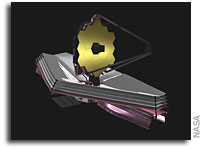
"When it works, and if it works, the James Webb Space Telescope could revolutionize astronomy by peering so deep into space that scientists soon could study the dawn of time. But construction of NASA's next big telescope has been so hurt by delays and cost overruns that even its staunchest champion in Congress reached a breaking point. In a letter dated June 29, U.S. Sen. Barbara Mikulski, D-Md., all but ordered NASA Administrator Charlie Bolden to assemble a panel of outside experts to ensure the Webb project doesn't break its latest promise: a 2014 launch on a $5 billion budget. "We like the concept of the Webb, but I tell you, we're not in the overrun business," said Mikulski, who chairs the Senate subcommittee with oversight of NASA's budget."


Advertise Here

8 Comments

| Leave a comment

If there's a strong chance they're going to cancel this thing they should not continue to pour money and resources into it.
Other big, complex space projects, like Skylab, Mir, the Hubble and the ISS, have had the benefit of human final assembly and repair. In fact, they've all needed repairs by spacewalk.
The Webb is expected to open-out its delicate, ultra-precise mirror automatically. If something goes wrong, as with the Galileo's antenna, there's not much chance of a human repair mission in the foreseeable future.
Now's the time to decide. There would be benefit in reallocating the resources. It would not be a complete scientific loss.

JWST is unlikely to be canceled, but it's substantial cost over-runs have wreaked havoc with the space astrophysics budget; this is likely to be underscored in the release of the decadal survey later this week. It's budget is gargantuan for a science mission, and already-sunk costs dwarf most other missions.

As for the servicing aspect - to be human-serviceable (now and in the foreseeable future) you need to be in a fairly specific low-earth orbit. Even polar orbit missions (IRAS,WISE, Akari, etc) are unserviceable because no manned capability exists for reaching those orbits, and even if there were, no budget exists to pay for them. A servicing mission would cost many times the total cost of those missions; it would be cheaper just to launch another one.

Once you get over the psychological barrier that you can't service things in earth orbit, you realize there's no reason to be there. This was a huge hurdle cleared by Spitzer (the preceding IR Great Observatory). Earth orbit is a terrible place for a space telescope. The earth subtends nearly half the sky, and this adds many scheduling constraints. More importantly, the earth is a tremendous heat load; cooled payloads devote huge resources and suffer limited lifespans because of this. The environment is also "dirty"; early Shuttle tests showed the environment around it was unsuitable for telescopes. I suppose a lot of that is junk that came up with it, but the next time WF/PC2 is at the Smithsonian (it's at JPL now) check out the sheer number of micrometeor craters on the outer shell.

As a result, Spitzer was in an "earth-trailing" orbit. JWST and SPICA will go to L2. In fact, most planned telescopes are headed to L2. I believe JWST did sprout an Orion docking adapter at some point, but frankly, who would be paying for it?

For the cost of a human servicing mission to a broken JWST, we could launch five replacements. The mirror deployment, you'll remember, takes place on it's way out of the Earth-Moon system.

Galileo, without having a human to service it, actually worked out pretty well.

Next question?

"If there's a strong chance they're going to cancel this thing they should not continue to pour money and resources into it."

Agreed. Which is why a stake should be driven through the heart of Constellation asap. You'd save a lot more than with JWST.

Harris Tweed: "Galileo, without having a human to service it, actually worked out pretty well."
That supports a general theory of optimism, but Webb is not a good thing to apply it to. If the Webb's mirror failed to open properly, like Galileo's antenna, I doubt that it would still work pretty well.
I'd be more favorably impressed with something like a redundant opening mechanism, maybe triple redundant. But I must confess, I don't know whether or not it has that already.

"If something goes wrong, as with the Galileo's antenna,..."

The most likely cause of Galileo's antenna problem was failure of the lubricant on the deployment drive mechanism. The spacecraft went into extended storage after the Challenger disaster much longer than the vendor's recommended storage duration. Engineers were aware of this issue, but NASA management did not have the funds to perform the necessary refurbishment before launch.

Redundancy is not always the answer to improving reliability. Especially for complex mechanical deployments which often have many unavoidable single point failures where things can get stuck. The answer is a reliable design that pays excruciating attention to detail, tons of margin on forces and torques, and lots and lots of testing.

In fact in general, the first thing you do for reliability of any kind of system is to make damn sure that the single string will work reliably. No amount of redundancy will help if there is an inherent flaw in all of the identical strings. Redundancy is only useful as an additional safety net to catch the rare random part failure.

Mark: "...rare random part failure"

I think all part failures can be called "rare".

Furthermore:
It may be a true generalization that redundancy doesn't always save the day, but a really smart, multiple redundancy does not merely repeat the same string.

Also, in this case there are also the potential benefits of:
-a second opening force overcoming a stuck mechanism,
-concentric bearings (or sockets or whatever), which would be an effective remedy in case one joint bearing gets stuck, the other concentric bearing turns within or around it, and allows the flexing.

Generalization notwithstanding, the Webb's mirror opening looks like one task that definitely would benefit from several methods of redundancy.

Leave a comment


calendar

Events
Launches
Your Event

Monthly Archives

Mortgage Lead

Play online bingo at the top bingo sites.

Interested in Space Travel, try the next best thing, name your own star.

Online Bingo

Hier finden Sie die neuesten Casino Bonus Codes von fuhrenden Gaming-Sites.

Forex like a Pro with a leading forex broker.

About this Entry

This page contains a single entry by Keith Cowing published on August 8, 2010 12:08 AM.

Send More Money - Or Cut Something Out was the previous entry in this blog.

Mini-RF's Map Of The Moon's Poles - So Far is the next entry in this blog.

Find recent content on the main index or look in the archives to find all content.


- Find brilliant bingo sites and start to win

-

- Trade Forex like a Pro

- Die besten Seiten fur online roulette spielen, Spielstrategien und Tipps.