NASA OIG: NASA's Top Management and Performance Challenges
"Efforts to develop commercial vehicles capable of carrying humans to the ISS and other low Earth orbit destinations present significant challenges. One issue of particular complexity is NASA's intent to "human-rate" any new flight system, whether developed commercially or by NASA. NASA only recently developed comprehensive human-rating standards for NASA-developed systems, and the certification process that will be used to human-rate commercial vehicles - several of which are already well under development - is not yet fully defined. Given the importance of this issue, the OIG is examining NASA's development of human-rating standards for commercial vehicles and will evaluate how commercial space transportation providers intend to implement NASA's safety and human-rating requirements."


Folks:
A quote from the report:
"NASA must balance its role as a partner of commercial providers with its responsibility to ensure that commercially produced vehicles are safe for NASA astronauts."
Quite a departure from the we run the show, the whole show, and we'll pay whatever it takes to get the job done attitude of NASA in the past when it comes to human space flight.
There's a lot of wiggle room in that statement for OIG/NASA but maybe there's hope.
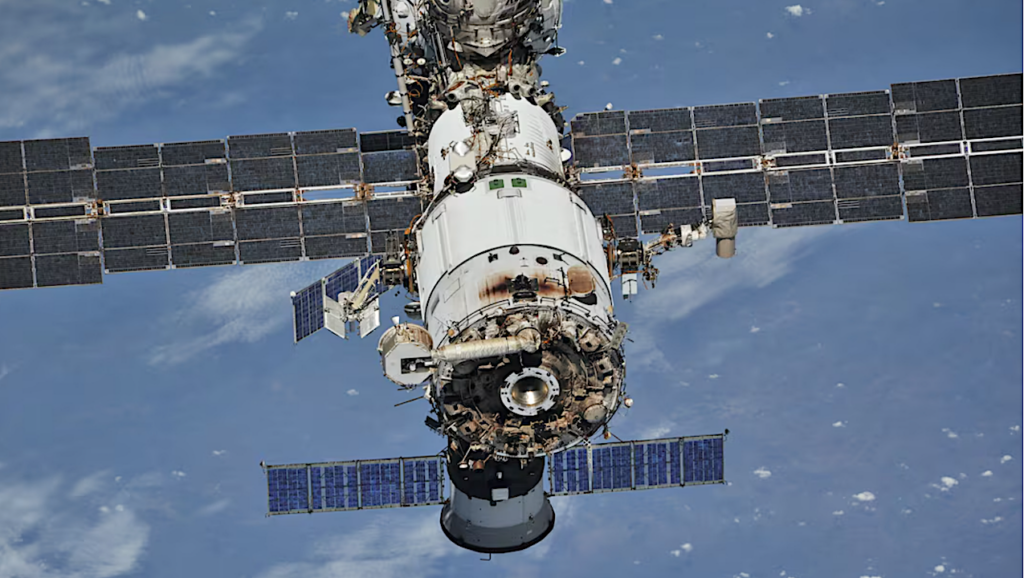
I think that if NASA gives commercial space more freedom in design that it will lead to better spacecraft and launch vehicles. For one thing the hardware won't be designed by hundreds of departments all over the country sometimes with competing motivations. You end up with something like the Shuttle of ISS where every square inch is just covered with hardware, switches, equipment, wires...
When I look at the pictures of the Dragon capsule from Spacex it's amazing how simple and clean the design looks. The inside volume of the capsule starts out as a clean slate which Spacex can configure for different missions. Because they intend to reuse Dragon almost all the flight systems except the solar panels and radiator are intigrated into the capsule. One advantage to this design is that the reaction control system can be used during re-entry for a more targeted landing.
SpaceDevs Dream Chaser could go a long way to bringing back some NASA glory. It would be a good candidate for Pads 39A and B. We'd get our runway landings and walk abouts back (but no more walking underneath though :( ). If Dream Chaser worked out then a larger orbiter could be built based on the HL-42. This would give NASA combined crew and cargo to orbit. The HL-42 would equal the Shuttle in crew as well as mid-deck and MPLM cargo (Though not at the same time).
If NASA wanted to "Co-opt" a spacecraft then Dream Chaser would be my choice. They could even pawn it off as a "second generation Shuttle". It was their design after all.
tinker